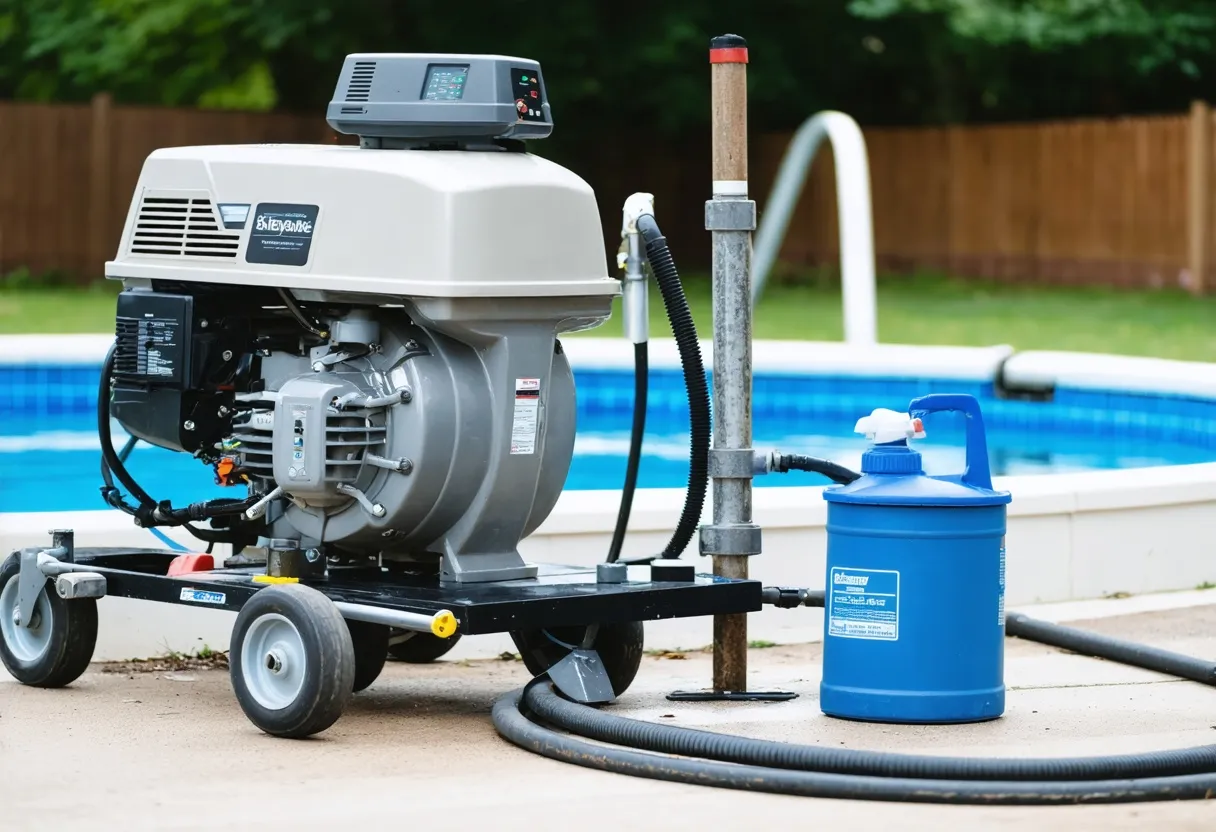
The pump, filter, heater, sanitizer, and controller sitting on a concrete pad behind a Greenville pool are doing more work than almost any other part of the project — they decide the monthly power bill, how often a homeowner has to think about the pool at all, and whether the system is still running clean a decade from now. Pool equipment and automation installation in Greenville, SC is a mechanical, electrical, and site-conditions problem all at once, and treating it as an afterthought bolted onto the end of a build is one of the most common ways a new pool turns into a maintenance headache.
This page is focused specifically on that equipment pad and the smart controls that run it — not the shell, the decking, or the excavation. We'll walk through what belongs in a properly matched saltwater and automation package, how the two systems actually work together, how installation sequencing plays out on a real Upstate lot, what pushes the price up or down, and why Greenville's clay soil and split city/county permitting rules change how a pad gets sited and wired in the first place.
01What a Complete Equipment and Automation Package Actually Covers
02Saltwater Systems and Smart Automation, Working as One System
Most new residential pools we see specified in the Greenville area now call for a saltwater chlorine generator rather than manual chlorine dosing, and the reasons hold up under scrutiny: sanitizer levels stay more stable, the sharp chlorine smell drops off, and there's no chemical jug to lift. But a salt cell is only half the story — saltwater pool systems in Greenville, SC perform best when the automation controller is managing them, not a homeowner guessing at a dial.
Why cell sizing and bonding matter more here than the sales sheet suggests
An undersized cell run at maximum output constantly to keep up with a pool's chlorine demand wears out early; an oversized one is money spent that the pool never needed. Getting that sizing right requires an actual volume calculation, not a rule of thumb. Just as important: saltwater is meaningfully more conductive than fresh water, which means bonding grids and equipment grounding have to be verified — not assumed — especially on a retrofit onto a pool that was never built with a salt system in mind. Ladders, rails, heater cores, and decorative metal near the water also need to be rated for salt exposure, or corrosion shows up within a few seasons.
Where smart pool automation earns its keep
Smart pool automation in Greenville is what turns that saltwater system, the heater, the lighting, and any water features into one coordinated schedule instead of several separate manual habits. A controller can throttle salt cell output automatically as chemistry drifts, hold a heat pump at a lower standby setpoint until it's needed, run pump speed against actual filtration demand rather than a flat timer, and flag a fault — a stuck valve actuator, a cell reading out of range — before it becomes a green-water phone call. On pools with a spa or a water feature, automated valve actuators also remove one of the more common causes of premature pump wear: a manual valve left partway open because someone forgot to switch it back.
None of that requires a pool built in the last few years. Equipment pads on older pools around Simpsonville, Taylors, and Mauldin can usually be automated without tearing out the whole pad, as long as existing bonding, panel capacity, and valve locations are evaluated honestly before wiring goes in — which is a site visit, not a phone quote.
03The Installation Sequence on a Greenville Equipment Pad
Confirm grade, drainage, and equipment pad placement on the lot's actual clay and slope conditions before any plumbing layout is finalized.
Pull pool, electrical, and any gas permits under whichever authority actually covers the address — City of Greenville or Greenville County.
Run pipe and wiring to the pad and to every valve, light, and feature location before decking or hardscape closes over it.
Build the pad with proper drainage clearance, then set and wire the pump, filter, heater, salt cell, and automation controller.
Balance water chemistry, calibrate the salt system, program the automation schedule, and walk the homeowner through the app hands-on.
04Engineered for Piedmont Clay, Not a Generic Spec Sheet
An equipment pad designed off a national install manual and one built for Upstate SC's dense, slow-draining clay are not the same pad. We grade, bed, and drain every pad — from Congaree Rd to the outer edges of Greer and Fountain Inn — for the soil that's actually under it.
05What Moves the Price: Tiers, Site Conditions, and Financing
Equipment and automation pricing in this market breaks down into three broad tiers, and where a project lands depends on sanitization method, how many circuits get automated, and heating choice.
The three tiers
A basic package — single-speed or entry variable-speed pump, standard filter, manual chlorine feed, no automation — carries the lowest install cost and the highest ongoing labor and operating cost. A mid-tier package, the most common choice for new Greenville-area builds, pairs a variable-speed pump with a saltwater chlorinator, a heat pump, and single-function automation such as pump scheduling. A full automation package adds app-based control across pumps, heating, lighting, valves, and any water features, with the highest upfront number but typically the lowest combined energy and labor cost over time. Within any tier, pool volume, the number of automated circuits, heat pump versus gas heater, and available electrical panel capacity all move the final number.
Where clay soil and permitting show up in the estimate — and don't get skipped
Two line items get underestimated by out-of-market bidders more than any other: pad drainage on clay-heavy lots, and jurisdiction-correct permitting. A pad set without proper grading or a gravel bed can end up sitting in standing water after an Upstate thunderstorm; a permit pulled under the wrong jurisdiction — city versus unincorporated Greenville County — causes inspection delays that cost more than doing it right the first time. Both are planning costs, not surprise change orders, when a contractor evaluates the actual site before quoting.
Financing the equipment and automation portion
Most homeowners roll equipment and automation into overall project financing rather than paying for it separately, whether that's home equity financing, a pool-specific unsecured loan, or a contractor-arranged payment plan tied to project milestones. For budgets that need to phase things, a cash-plus-phasing approach — installing core equipment now while sleeving conduit and plumbing for automation — is often the cheapest path overall, since that wiring is inexpensive to add during construction and considerably more expensive to retrofit once decking has been poured over it.
06Equipment and Automation Questions Greenville Homeowners Actually Ask
Can I convert my existing chlorine pool to a saltwater system?
In most cases yes, provided the pump and filtration can support the salt cell's flow requirements and bonding and grounding are verified for the added water conductivity. Any metal fixtures, heaters, or hardscape near the pool also need to be salt-compatible or upgraded.
Does Greenville's clay soil really affect equipment installation?
Yes. Upstate SC's dense clay drains slowly and can shift seasonally, which affects equipment pad drainage, conduit and plumbing trench bedding, and pad placement on sloped lots. Skipping a real site evaluation on clay-heavy ground is a common cause of standing water at the pad later.
Do I need different permits inside Greenville city limits versus the surrounding county?
Yes. Work inside city limits goes through the City of Greenville's permitting process, while properties in unincorporated Greenville County — including much of the area toward Simpsonville, Taylors, Mauldin, Greer, and Fountain Inn — fall under the county's process instead. Electrical and gas work for equipment often needs its own trade permit separate from the general pool permit.
Can automation be added to a pool that was never wired for it?
Usually, yes. It starts with evaluating existing bonding, panel capacity, and valve locations. Most pools that weren't originally built with automation can still be retrofitted without replacing the entire equipment pad, though the scope depends on what's already in the ground.
What should I actually check before hiring someone for this scope of work?
Confirm proper state contractor licensing for electrical and gas-adjacent work, PHTA (Pool & Hot Tub Alliance) certification, manufacturer training on the specific automation and salt system brands being installed, and that they'll walk your actual site — soil, grade, drainage — before quoting a pad location rather than pricing it sight unseen.
Is a saltwater system harder to maintain than traditional chlorine?
It's different, not harder. Ongoing care shifts toward periodic salt cell inspection for scale buildup and confirming bonding stays sound over time, in exchange for not hand-dosing chlorine. Paired with automation, chemistry alerts and scheduling handle most of what used to be a manual check.
Get your free quote
Tell us about your property and we'll follow up with next steps — no pressure, no obligation.
Ready to see what your site needs?
Get a free, no-obligation quote built around your property's actual conditions.